Community

Tiny Homes for Soteria Graduates: A New Housing Solution for Reentering Society

JULY 30, 2026

Reprinted from The Greenville Journal

GREENVILLE, S.C. - A tiny home project in Greenville County aims to create more affordable housing for people who were formerly incarcerated. 

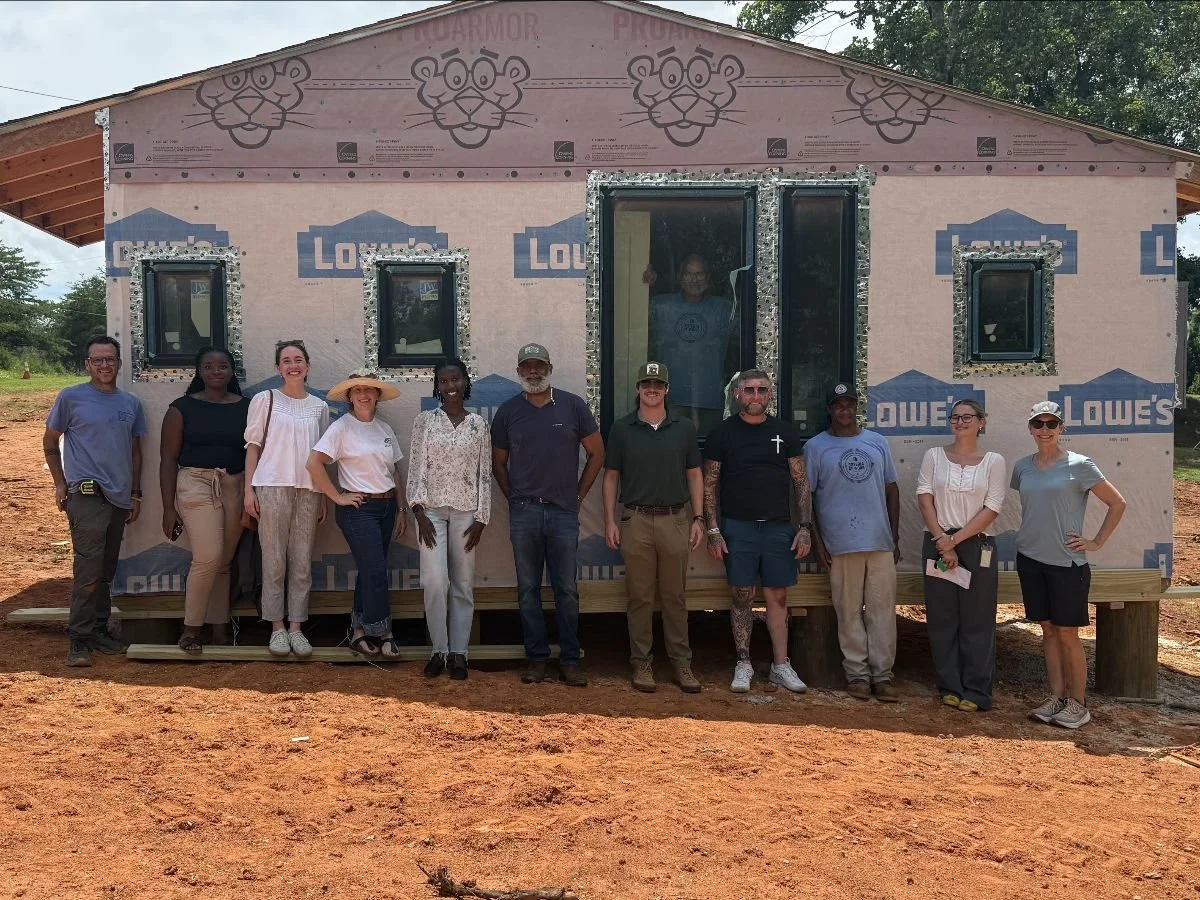
The vision for the Tiny House Collaborative originated within the architecture department at the Fine Arts Center in Greenville County Schools. Department Chair Catherine Smith-Gates instructed her students to design three tiny homes for those experiencing homelessness in the fall of 2026.

These designs will be used to create a tiny home community for Soteria Community Development Corp., a Greenville-based nonprofit assisting men and women who were previously imprisoned. Five homes are planned for graduates of the organization’s one-year transitional program, each with a monthly rent of around $400 to $500.

Jerry Blassingame, CEO of Soteria CDC, said it can be difficult for people released from prison to access affordable housing. He explained that landlords often reject an applicant with a criminal record.

“We’ve been trying to get the stock of housing up for people with criminal backgrounds,” Blassingame said. “This tiny home community will be another step where people with criminal backgrounds can rent a safe, quality place to live for a period of time.”
SC State Legislators pass a State Earned Income Tax Credit

Earned Income Tax Credit logo

The SC Association for Community Economic Development along with many partner advocates worked for years to lower taxes on low-wage South Carolinians and their families through a refundable state-level EITC worth 20 percent of the federal credit.

On May 11, 2017 a nonrefundable EITC worth 125% of the federal credit was tacked on to the "Roads" bill by Democratic lawmakers in an attempt to mitigate the burden of a proposed gas tax on lower-income workers. Governor Henry McMaster (R) vetoed the legislation on Wednesday for reasons unrelated to the EITC, but the legislature overrode his veto today, and the bill goes into effect July 1.

"Although the enactment of a state-level EITC will bring much-needed tax relief to many low-wage South Carolinians, the credit could benefit many more if it were eventually made refundable. Those earning the least owe little to no income tax and are often unable to benefit from nonrefundable EITCs, despite paying other taxes like sales and payroll. According to the Institute on Taxation and Economic Policy, only about 2% of South Carolinians with the lowest incomes (below $21,000) will benefit from the new EITC. Eventually making the credit refundable would help more of these families make ends meet. to sustain and enhance their programs, activities, and services." - Tax Credits for Workers and Their Families (TCWF)

County Health Rankings Released

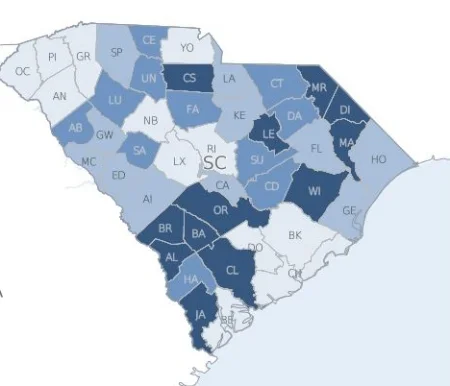
County Health Rankings

The annual County Health Rankings will be released on March 29th. The health of nearly all counties in the nation is measured and then ranked within the states. The rankings are compiled using county-level measures from a variety of national and state data sources. This valuable tool enables you to view an overview and comparison of South Carolina's counties complete with downloads of relative documents dating back to 2010.

The rankings are based on a model of population health that emphasizes the many factors that, if improved, can help make communities healthier places to live, learn, work and play. Building on the work of America's Health Rankings, the University of Wisconsin Population Health Institute has used this model to rank the health of Wisconsin’s counties every year since 2003. 

City of Columbia Employees Participate in Poverty Disaster Simulation

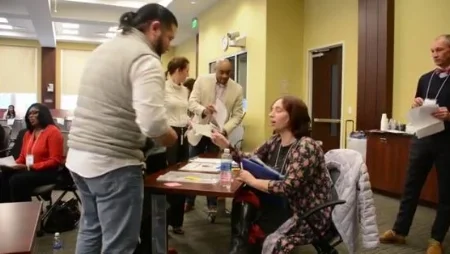
City of Columbia Employees participate in Poverty Disaster Simulation

On February 3rd, City of Columbia employees were invited to participate in a poverty simulation to help people better understand the complicated life one lives when in poverty. The event was coordinated by the American Bar Association and held at the South Carolina Bar Conference Center. Members of the Columbia legal community were also in attendance including students and faculty and staff from the University of South Carolina School of Law.

The simulation lasted 2.5 hours and was broken up into five “weeks,” with each week lasting approximately 15 minutes. Attendees were given character profiles which included their character’s name and a brief backstory of their experiences. They were then broken into teams, or "families", and had the goal of meeting their families’ most basic needs. Volunteers took on roles as bank representatives, social service workers, day-care providers, legal aid attorneys, grocers and employers, all offering services or goods the families needed to survive.

The following video highlights the simulation in February, and more detailed information can be found in this article.

2017 VITA Awareness Day

The VITA Program

March 15, 2017, is VITA Awareness Day. Each year, the Volunteer Income Tax Assistance (VITA) program puts billions of dollars back in the pockets of low-income taxpayers nationwide. In 2015, CFED launched their first-ever VITA Awareness Day to call attention to the importance of VITA programs in the communities they serve. CFED has engaged partners and advocates, like SCACED, across the country to help raise the profile of community tax preparation.

Below are some interesting data points that CFED has shared in regards to VITA programs in South Carolina. During the 2015 filing season alone, they:

  • Stimulated the local economy by helping taxpayers receive $39,589,030 in tax refunds – which will be recirculated in the state
  • Filed more than 39,288 federal tax returns and 39,685 state tax returns
  • Helped hard-working families file 8,842 Earned Income Tax Credit (EITC) claims for a total of $12,030,053 – and in the process, given that the average EITC tax filer spends $400 on tax preparation, saved low-income EITC taxpayers approx. $3,536,800 that would have otherwise been spent on paid tax preparers
  • Helped 3,746 struggling families receive a total of $4,617,146 to offset childcare expenses and better support their children

The CFED believes that promoting community tax preparation is especially important in South Carolina since Senator Tim Scott sits on the Senate Finance committee that is instrumental to advancing federal VITA legislation. To support these efforts, you can contact Senator Scott and encourage him to co-sponsor S. 193, the VITA bill that would increase access to VITA services for low-income and under-served populations.